Destinations in China
Chengdu for First-Time Visitors
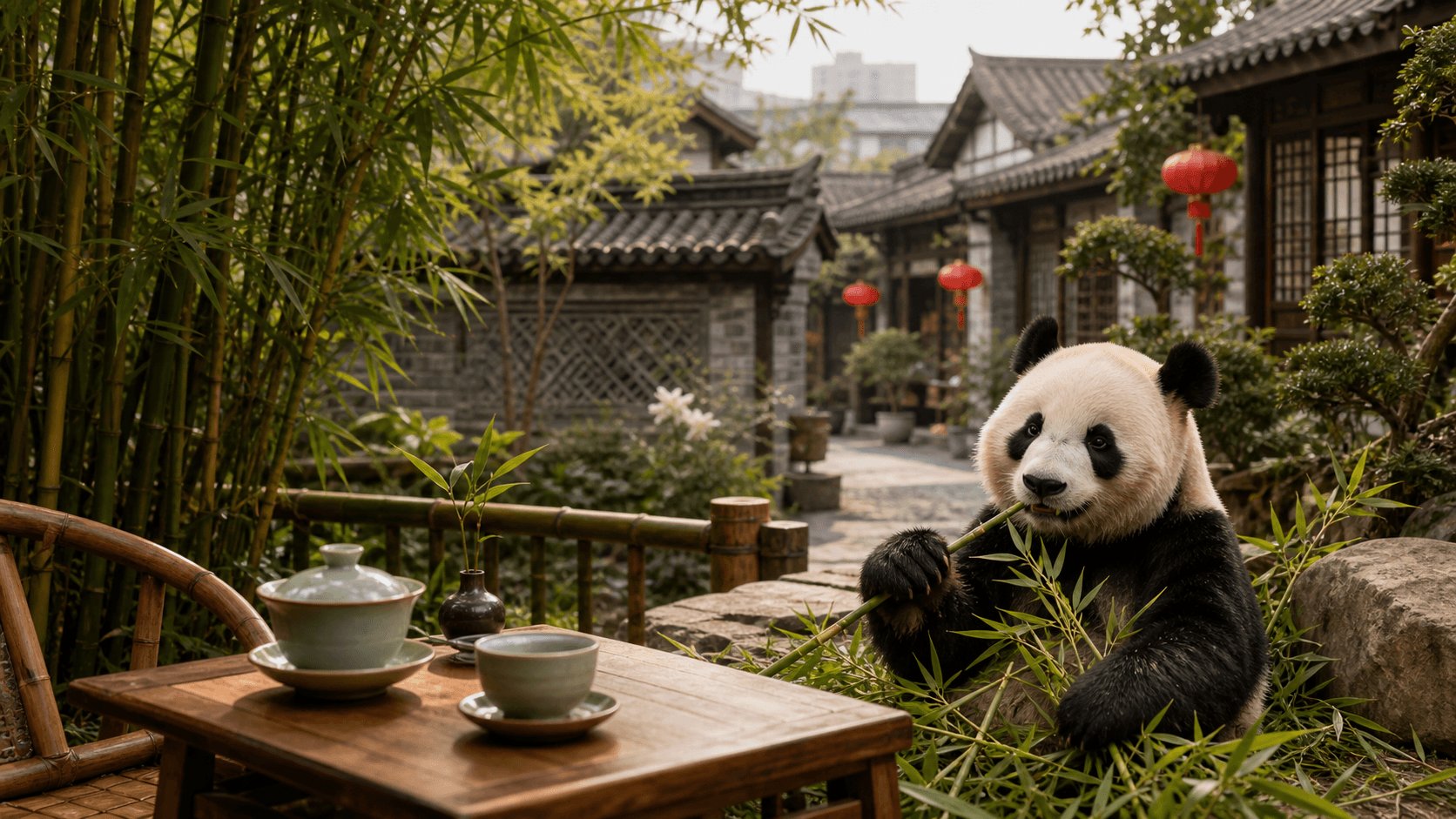
A first Chengdu guide for travelers who want giant pandas, Kuanzhai Alley, Jinli Street, tea, food, and a gentler city rhythm.
- Last updated
- 2026-06-04
- Best for
- Travelers who want pandas, Sichuan food, neighborhood atmosphere, and a slower urban rhythm
- May change
- Panda-base ticketing, opening hours, animal visibility, seasonal events, and transport details
Why Chengdu is an easy city to like
Chengdu works well after a faster city such as Beijing or Shanghai. It gives first-time visitors pandas, Sichuan food, tea-house culture, and a looser pace. The goal is not to race through a list. Chengdu is at its best when the itinerary leaves room to sit down.
A realistic two-day rhythm
- Day one: Visit the Chengdu Research Base of Giant Panda Breeding early, then keep the afternoon light.
- Day two: Walk Kuanzhai Alley and spend time around Jinli Street and the Wuhou Shrine area.
If you have more time, add Chunxi Road and Taikoo Li for a central commercial walk, Du Fu Thatched Cottage for literary atmosphere, or Qingyang Palace for a quieter Taoist site.
Chengdu Panda Base: go early and stay flexible
The Chengdu Research Base of Giant Panda Breeding is the obvious first stop for many visitors. Go early, check current ticketing and entry rules, and remember that animals do not follow sightseeing schedules.
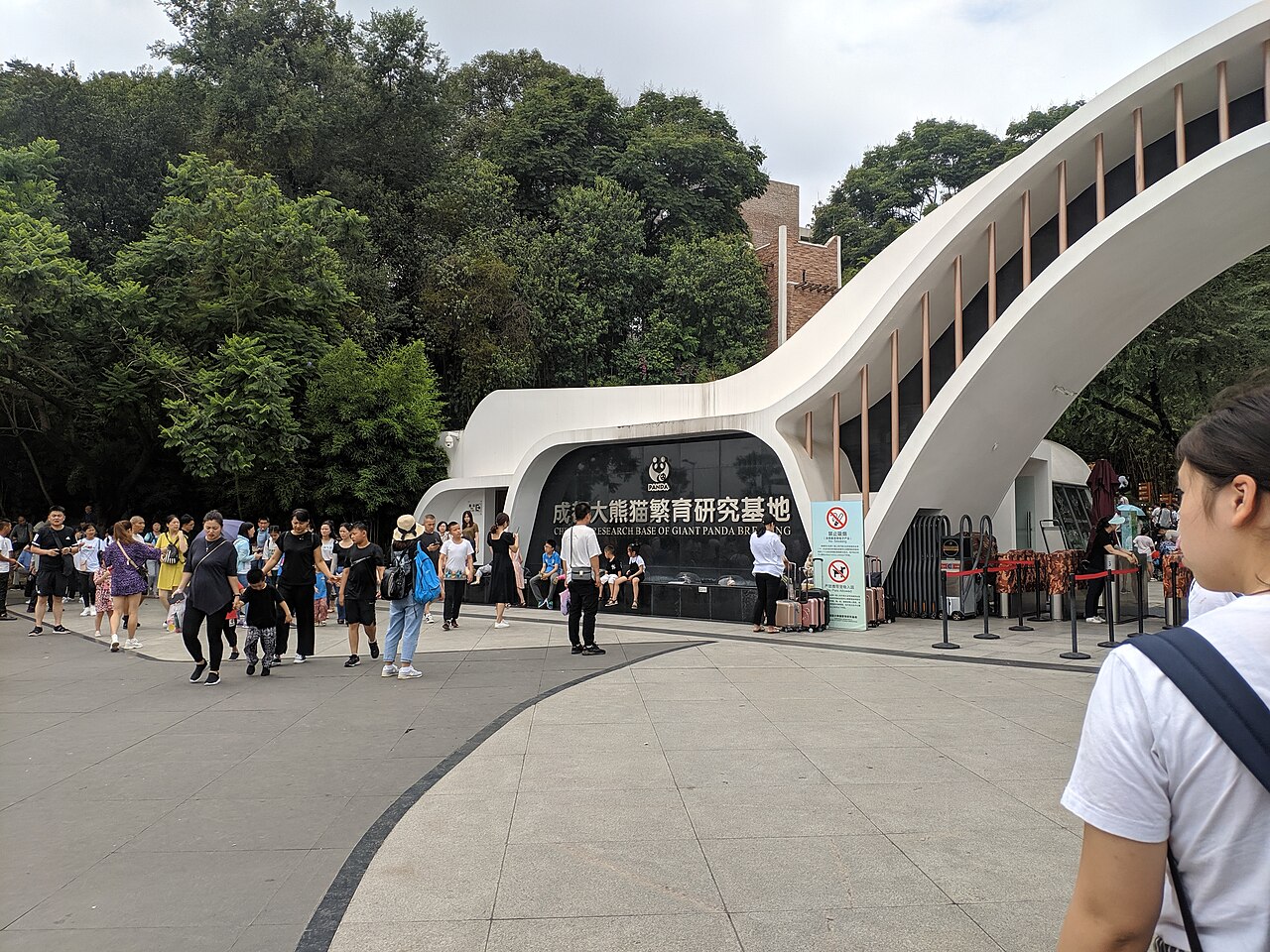
Photo: Wikimedia Commons, Jimmyshjj, open license.

Treat a good panda sighting as a gift, not a contractual obligation. A quieter afternoon afterward is usually a better choice than stacking another major excursion immediately on top.
Kuanzhai Alley: use it as an introduction, not the whole city
Kuanzhai Alley is a well-known pedestrian area and an accessible place to begin noticing Chengdu's relationship with courtyards, snacks, small shops, and slower strolling. It can become busy, so visit with realistic expectations.
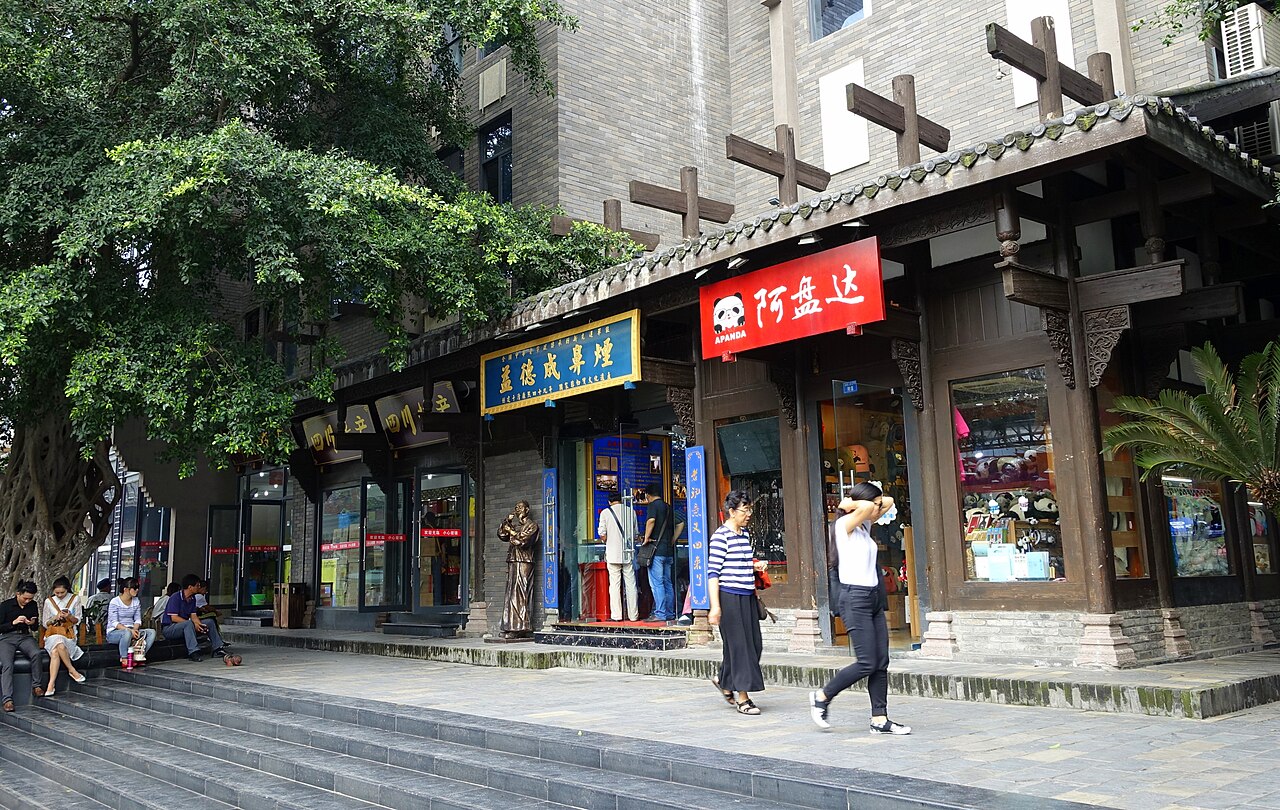
Photo: Wikimedia Commons, Daderot, open license.

Use it as a starting point. Chengdu's atmosphere is not contained in one polished pedestrian street.
Jinli Street and Wuhou Shrine: food and Three Kingdoms context
GoChengdu describes Jinli as a street beside the Wuhou Shrine Museum with western Sichuan-style architecture, lanes, courtyards, bridges, and snack options. The pairing is useful: Jinli offers an easy sensory introduction, while the Wuhou Shrine area connects Chengdu with Three Kingdoms history and cultural memory.
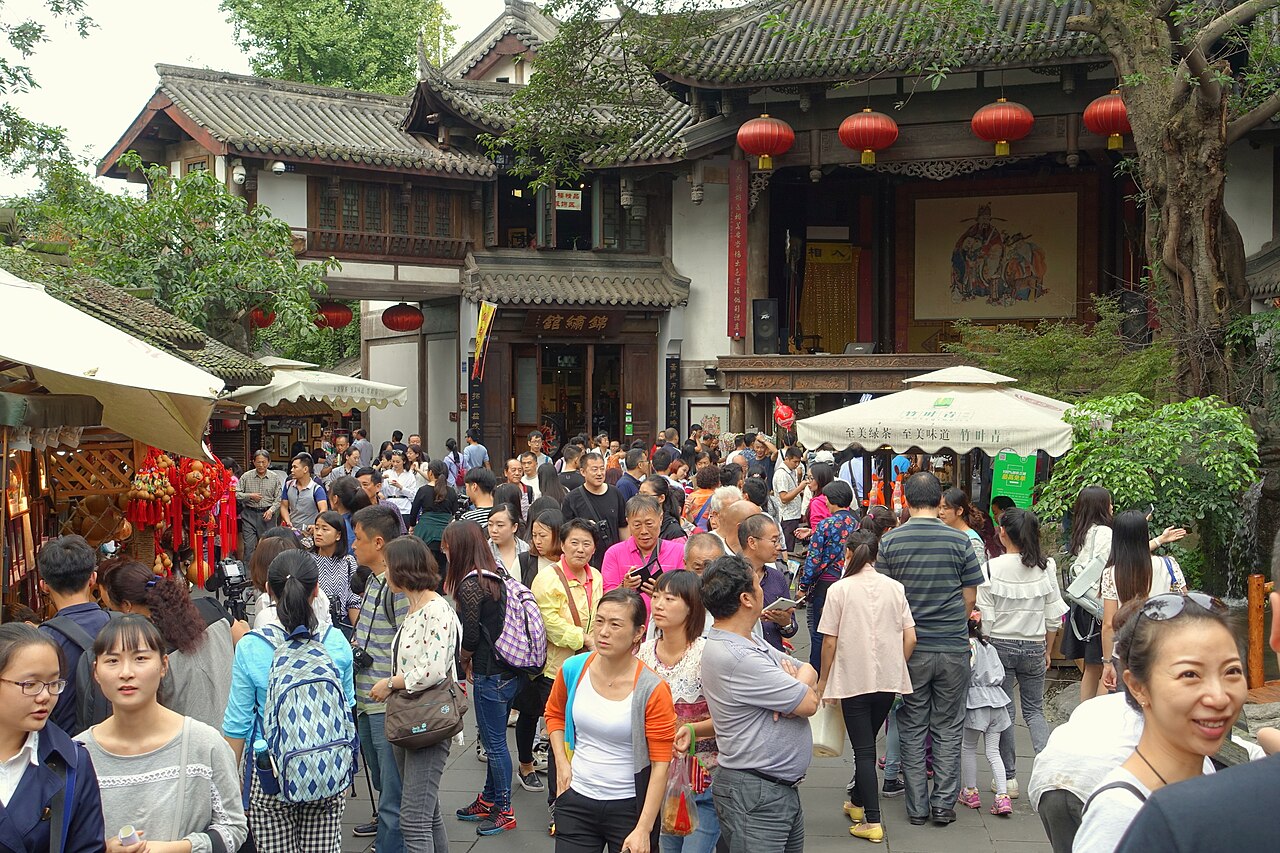
Photo: Wikimedia Commons, Daderot, open license.

More places to consider
Du Fu Thatched Cottage is a good cultural stop if poetry, gardens, and calmer museum space appeal to you. Qingyang Palace adds Taoist context and is better for travelers who want to understand religion and daily worship beyond the usual tourist street. Chunxi Road and Taikoo Li are not ancient, but they are useful for shopping, people-watching, coffee, and a relaxed city-center evening.
Detailed backup routes if you stay longer
Chengdu's backup routes should stay unhurried. The city works best when you let each block breathe.
Du Fu Thatched Cottage half-day
Plan 2-3 hours. It is best for readers who enjoy literature, gardens, and quiet museum space. The point is not only the poet Du Fu, but also the way Chengdu frames poetry, memory, and landscape together.
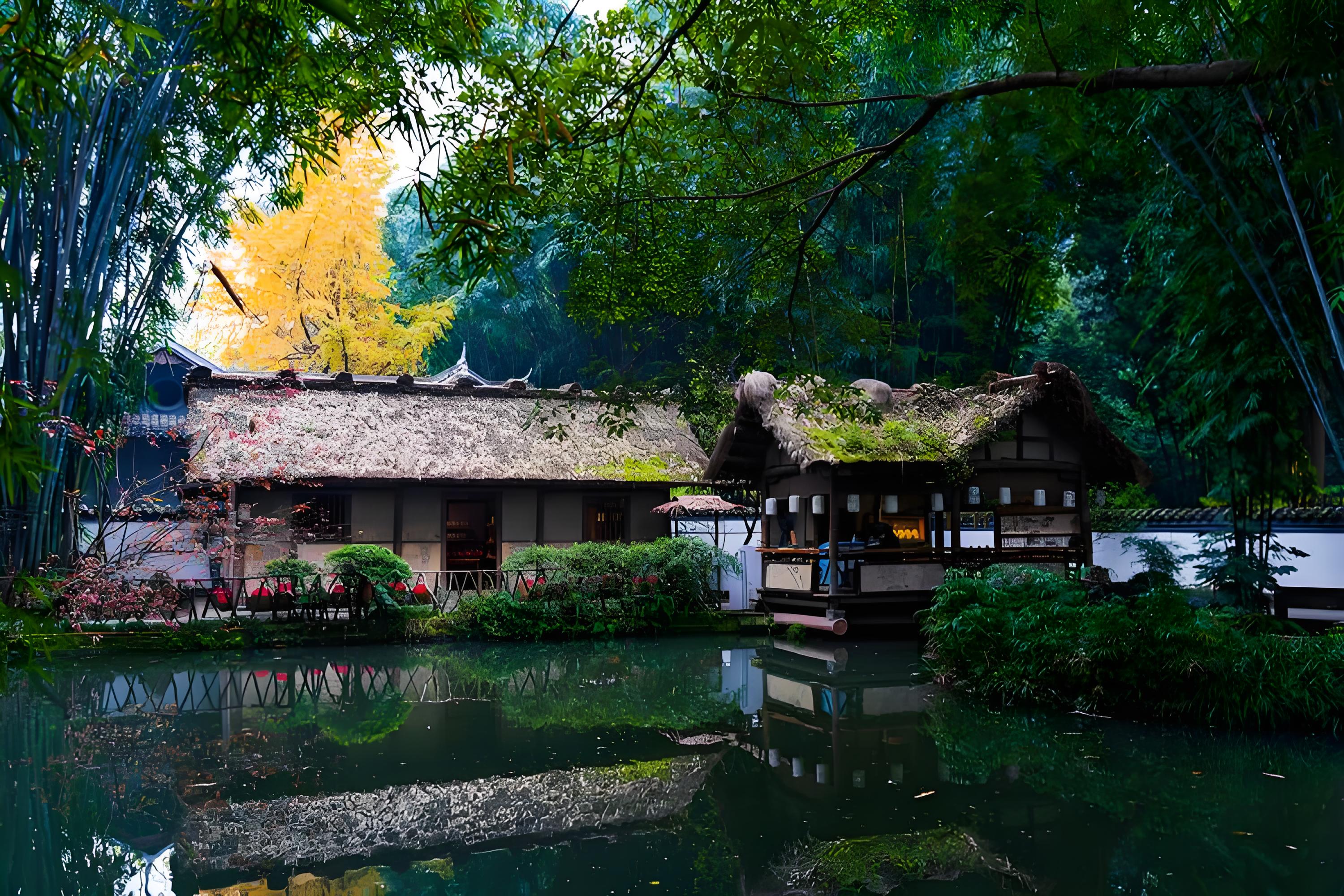
Photo: Local reference image provided for this guide.
Qingyang Palace + nearby tea or park time
Plan 2-3 hours. This Taoist site is a useful contrast to tourist streets. Be respectful around worshippers and do not treat incense rituals as a performance.
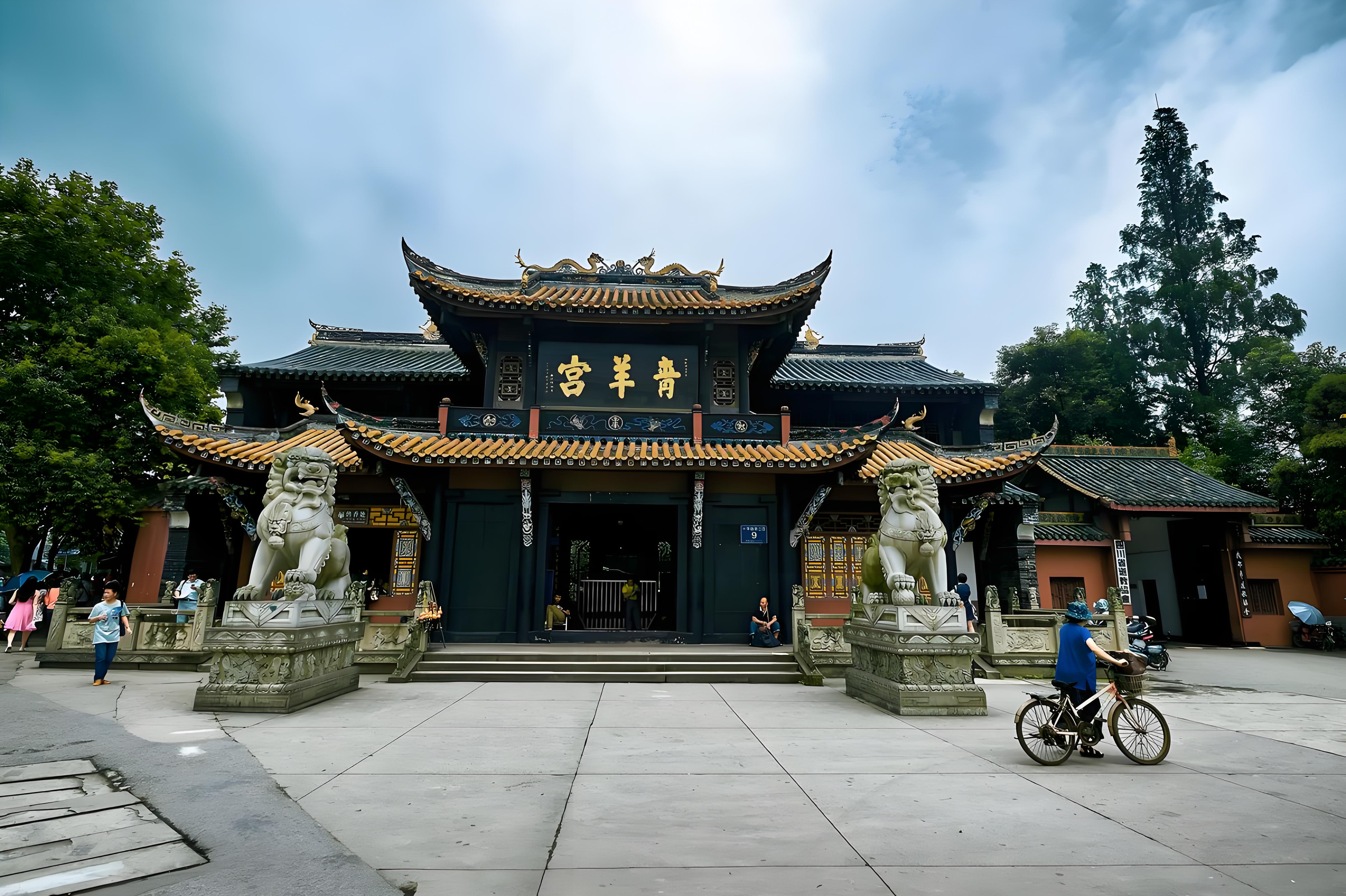
Photo: Local reference image provided for this guide.
Chunxi Road + Taikoo Li evening
Plan 2-4 hours. This is modern Chengdu: shopping, cafes, restaurants, people-watching, and nightlife. It is a practical backup if weather makes outdoor heritage sites unpleasant.
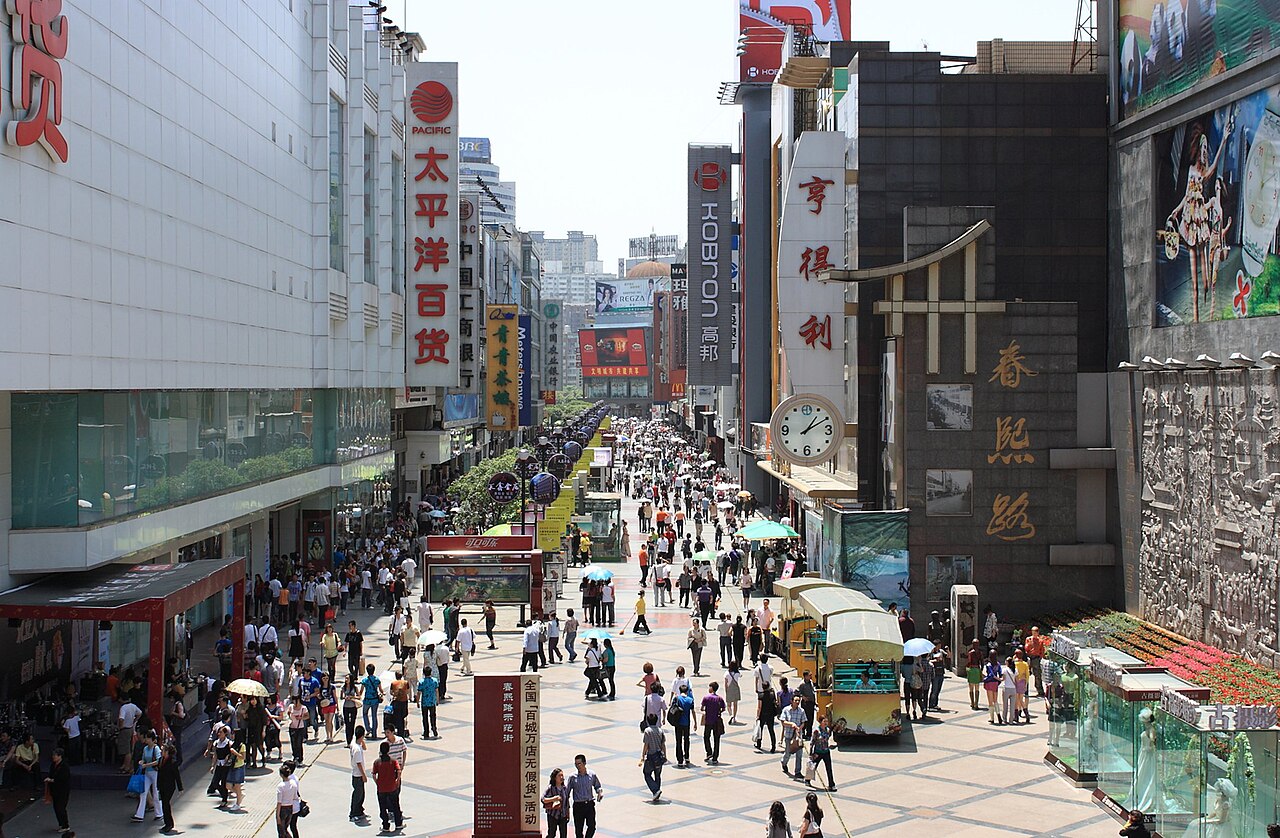
Photo: Wikimedia Commons, Gong Chen, Mlogic, open license.

Dujiangyan or Leshan day trip
Plan one full day for either, not both. Dujiangyan is better for water-management history and mountain-edge scenery; Leshan Giant Buddha is stronger as a landmark day trip but needs more transport planning.
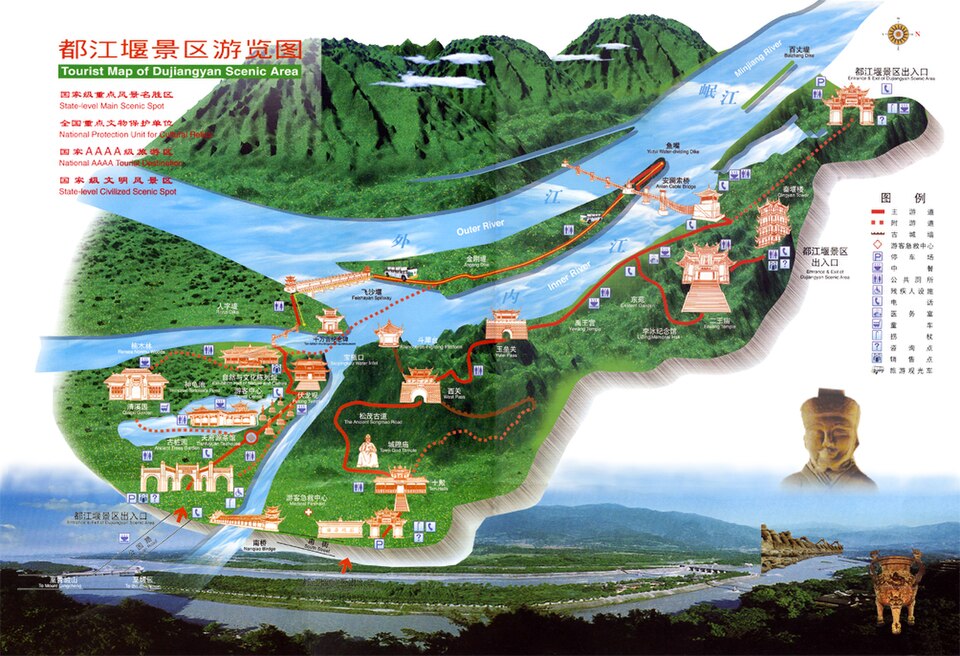
Photo: Wikimedia Commons, Ihtc2015, open license.

Getting around
For the Panda Base, check the current official route before departure. Metro-plus-shuttle, public bus, ride-hailing, and organized tours can all work, but the best choice changes with your hotel location and crowd levels. Go early: pandas are generally more active earlier in the day, and visitor flow builds later.
Kuanzhai Alley, Jinli, Wuhou Shrine, and central shopping areas are easier to combine by metro and short ride-hailing hops. Save destination names in Chinese because some English place names have multiple translations.
More Chengdu add-ons by theme
City temples, museums, and nightlife
Sanxingdui Museum is one of the strongest cultural add-ons from Chengdu. Plan a full or near-full day including transport. It is best for travelers interested in ancient bronze culture and non-central-plains history; check the official Sanxingdui Museum site for ticketing and entry notices.
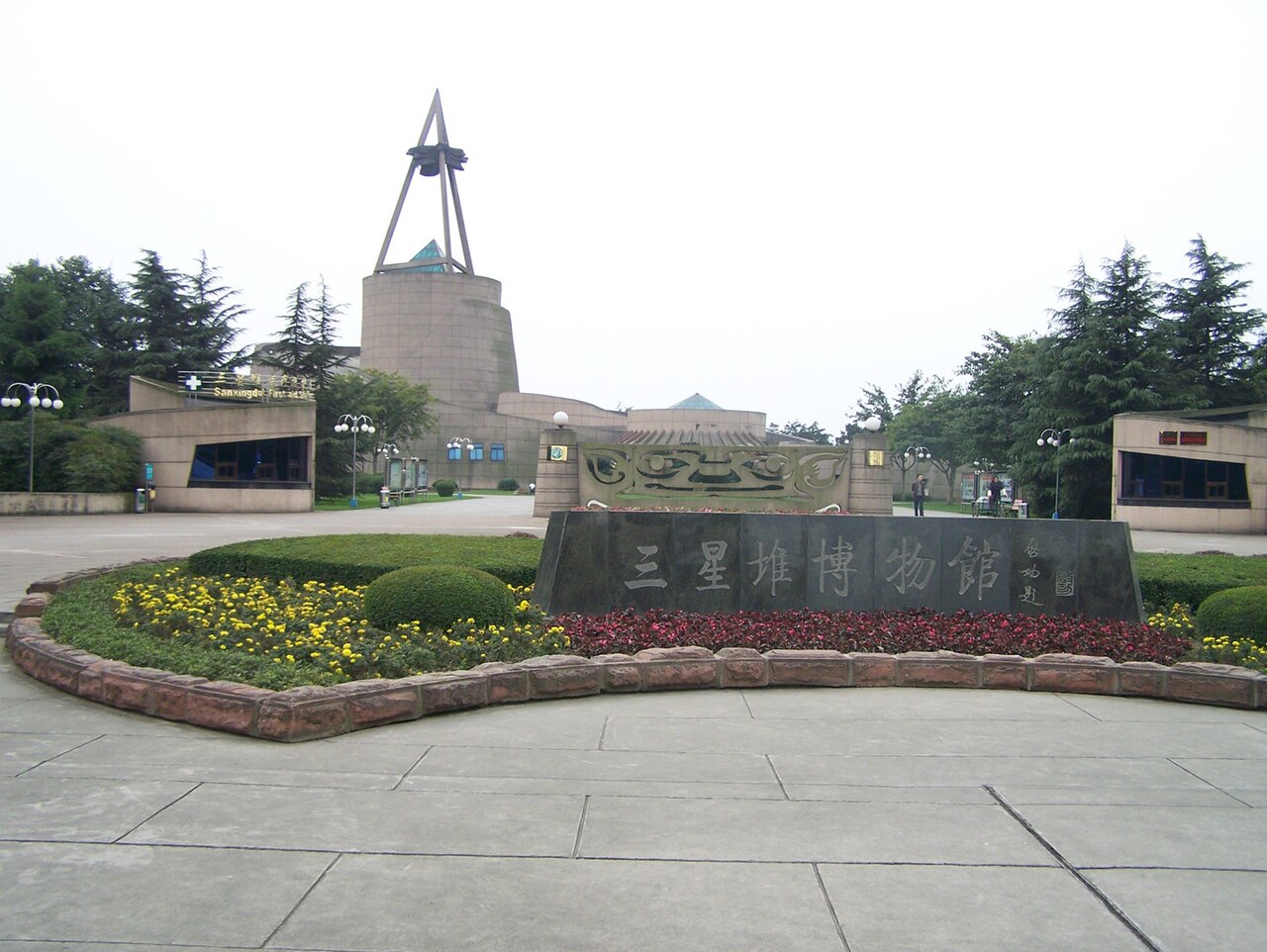
Photo: Wikimedia Commons, Jason Zou, open license.

Wenshu Monastery is a city-center Buddhist site with calmer atmosphere than the busiest tourist streets. Plan 1.5-2.5 hours and behave respectfully around worshippers.
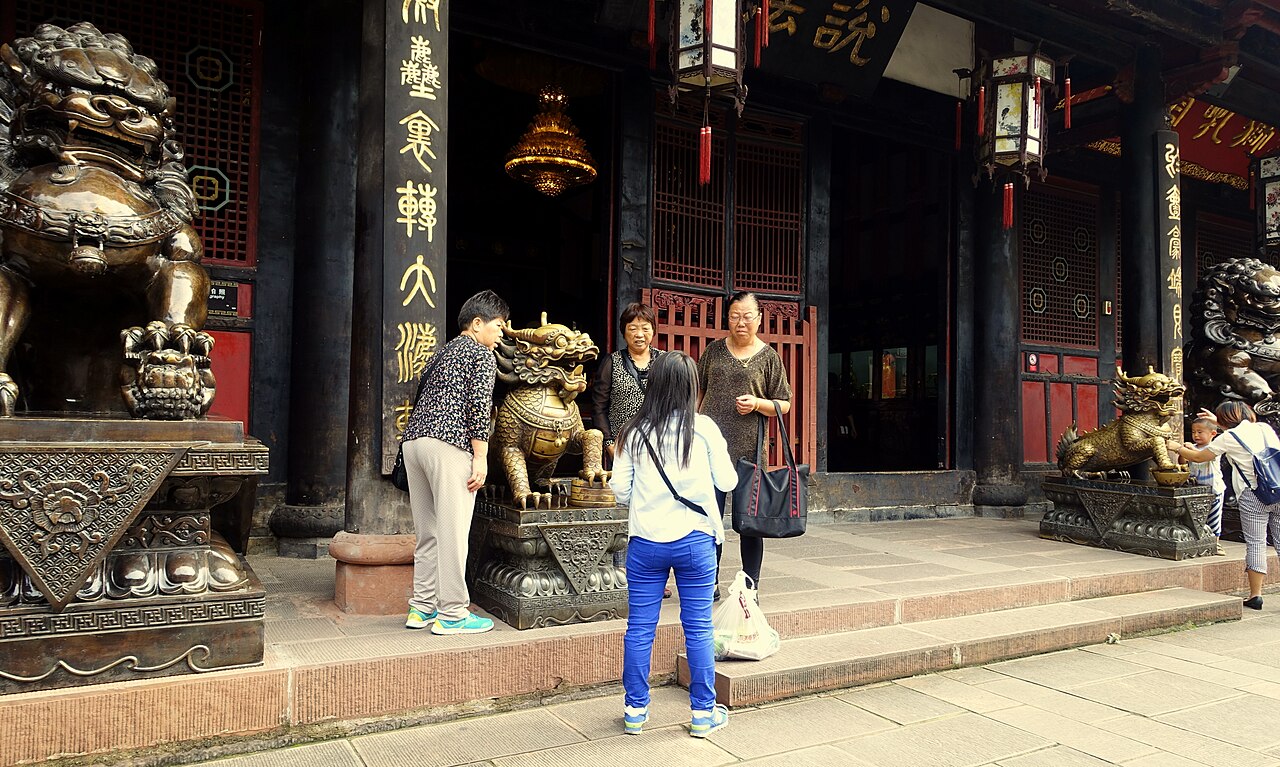
Photo: Wikimedia Commons, Daderot, open license.

Jiuyan Bridge is a nightlife and river-area add-on. Plan 1.5-3 hours in the evening; keep transport back to your hotel simple.
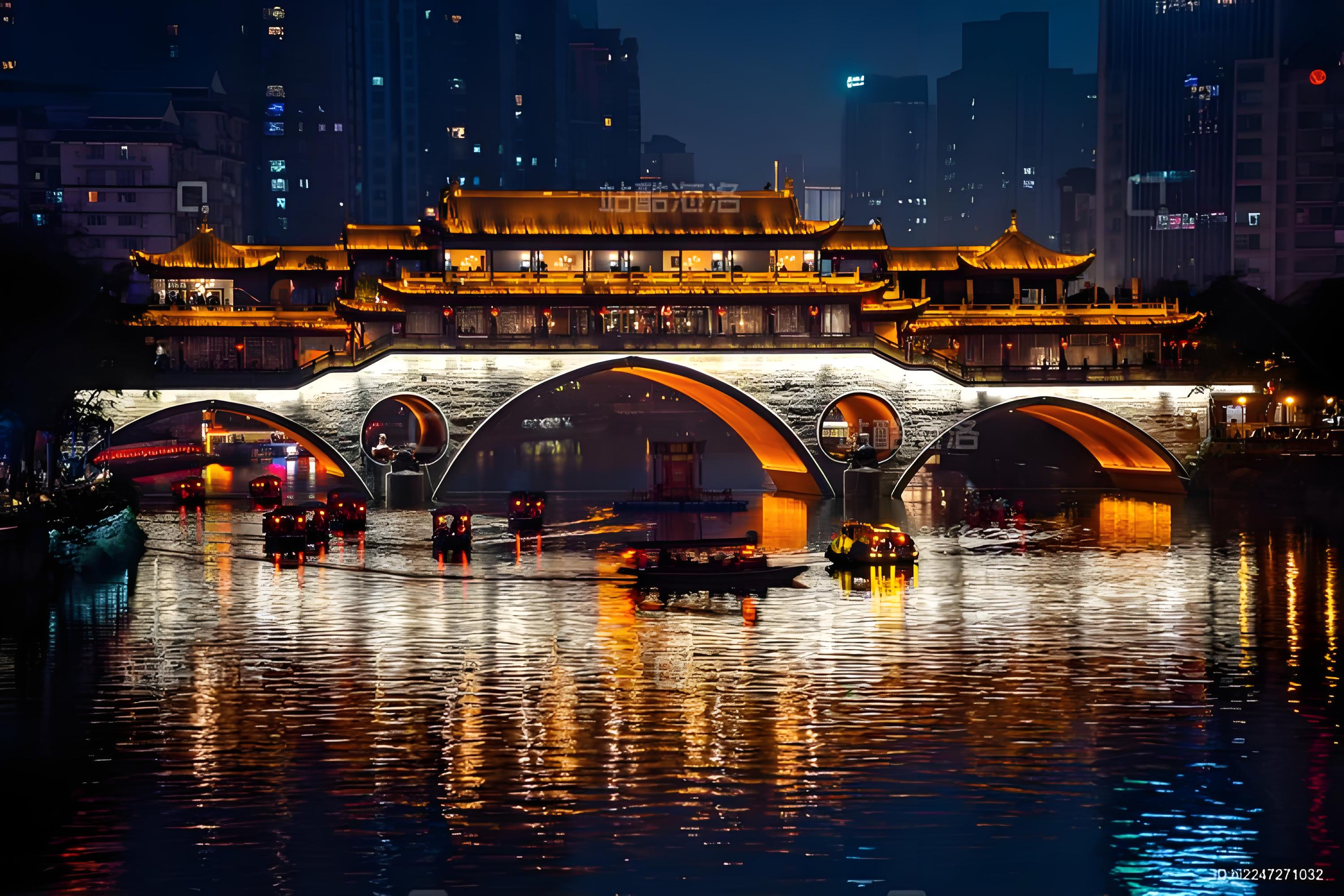
Photo: Local reference image provided for this guide.
Day trips and longer nature routes
Qingcheng Mountain and Dujiangyan can work as a long single-day route if you start early, but slower travelers may prefer one focus. Mount Emei and Leshan Giant Buddha are also famous, but combining them in one day can feel rushed. Jiuzhaigou and Huanglong are not ordinary Chengdu day trips; treat them as multi-day nature routes with flights, long drives, altitude, weather, and park-entry planning.
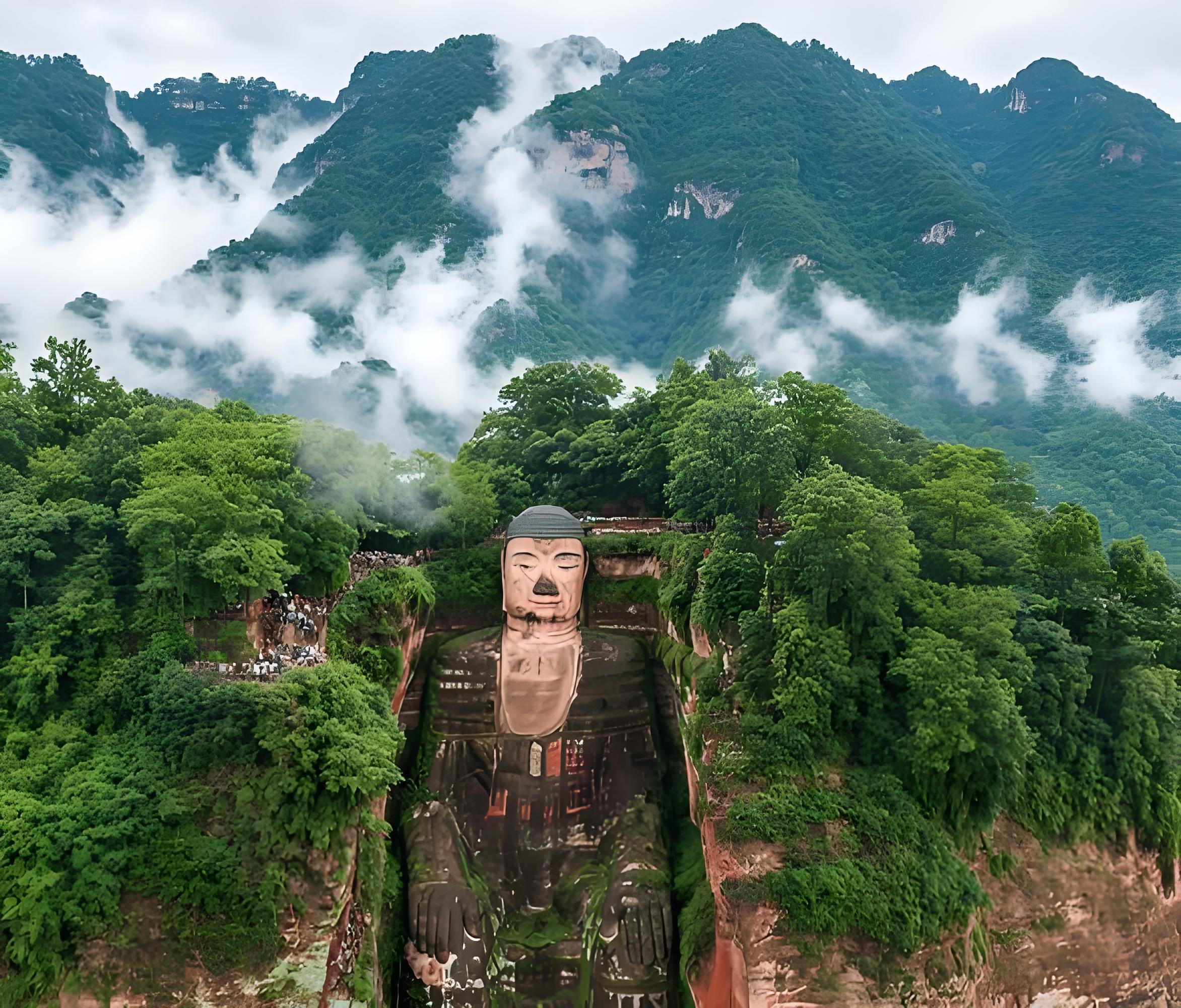
Photo: Local reference image provided for this guide.
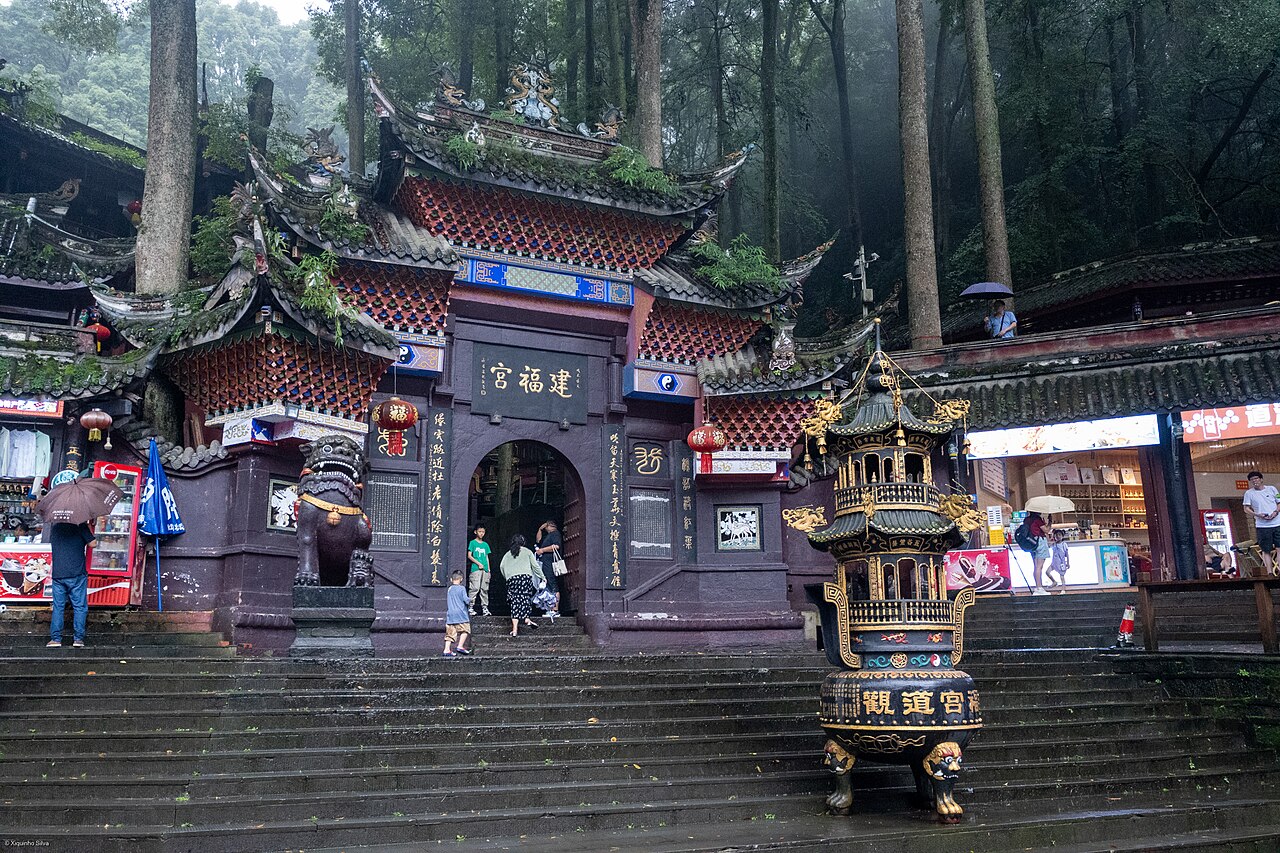
Photo: Wikimedia Commons, xiquinhosilva, open license.

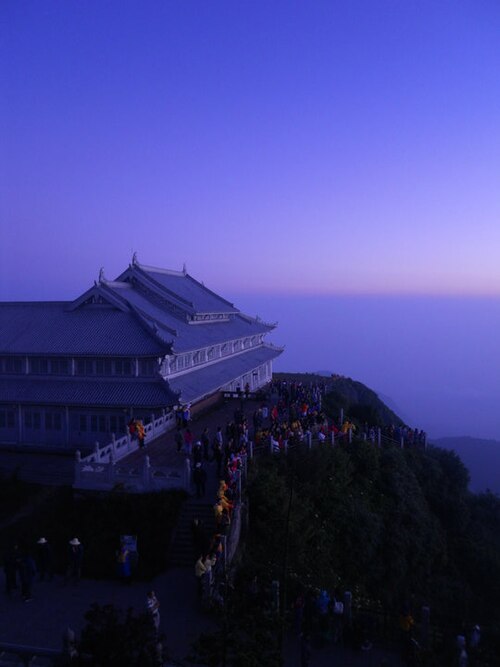
Photo: Wikimedia Commons, Vanvelthem Cédric, open license.

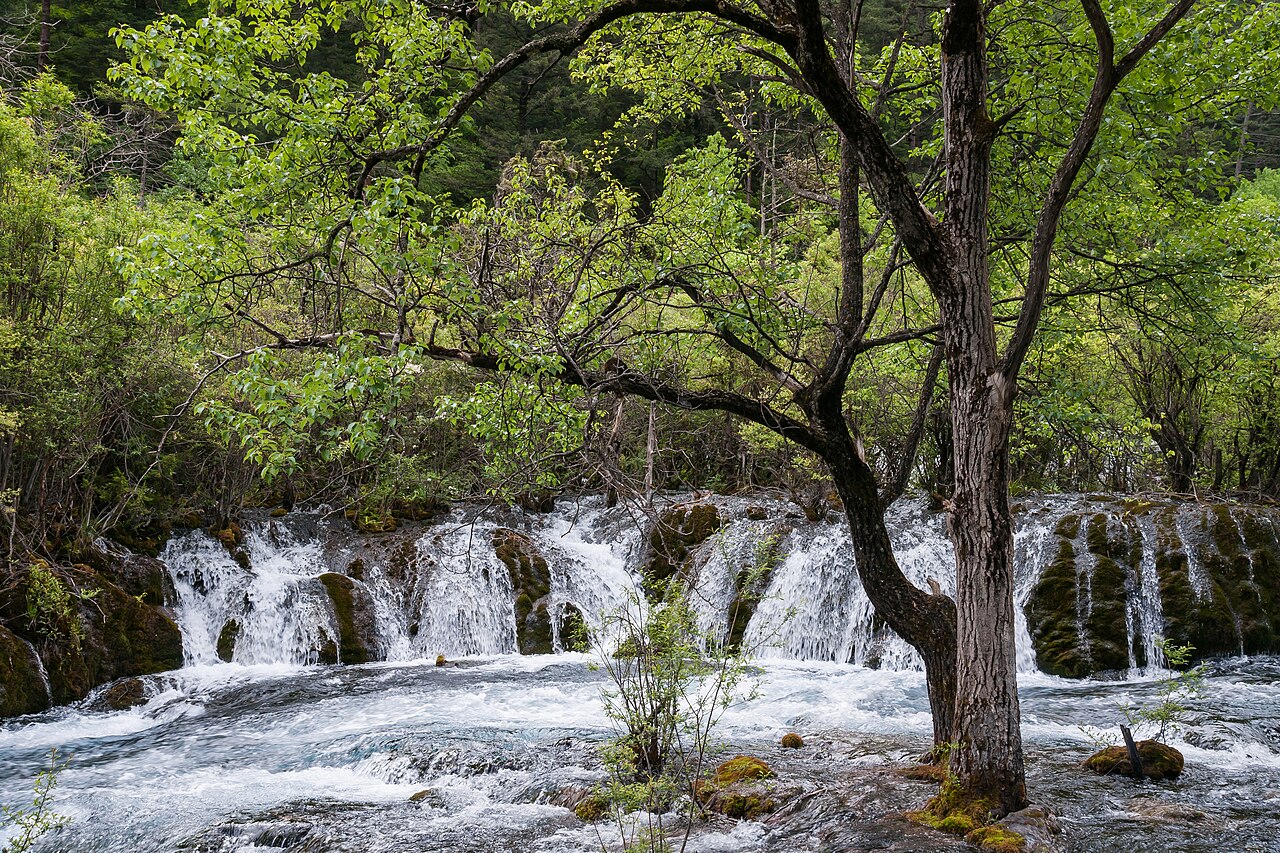
Photo: Wikimedia Commons, CEphoto, Uwe Aranas, open license.


Photo: Local reference image provided for this guide.
Food notes
Sichuan food is a reason to visit, but you do not have to begin with the hottest possible dish. Kuanzhai Alley and Jinli are convenient but touristy; local restaurants near residential areas can be better once your payment and translation setup feels stable.
Hotpot
Hotpot is a shared meal where raw ingredients are cooked in a simmering pot, often with chili oil and Sichuan peppercorn. Start with a mild or split pot if you are unsure.
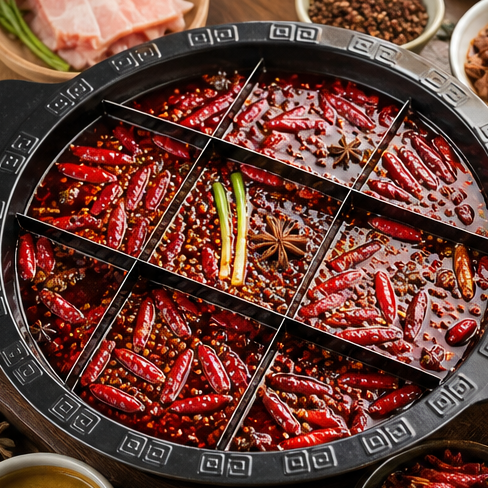
Image: AI-generated local food photograph, no brand or identifiable shop.
Chuanchuan
Chuanchuan is similar in spirit to hotpot, but ingredients come on skewers. It is usually more casual and flexible.
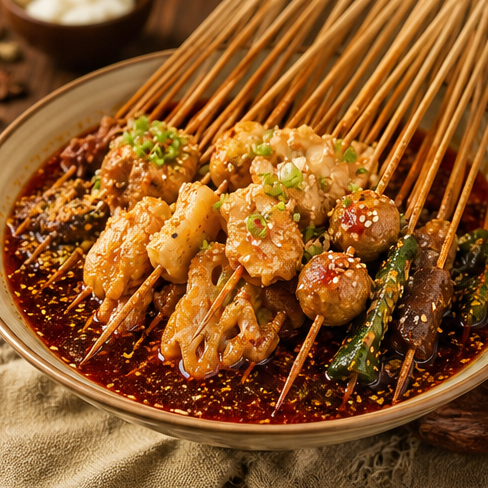
Image: AI-generated local food photograph, no brand or identifiable shop.
Dandan noodles
Dandan noodles are small bowls of noodles with chili oil, minced meat, preserved vegetables, and a nutty or sesame-like richness depending on the shop.
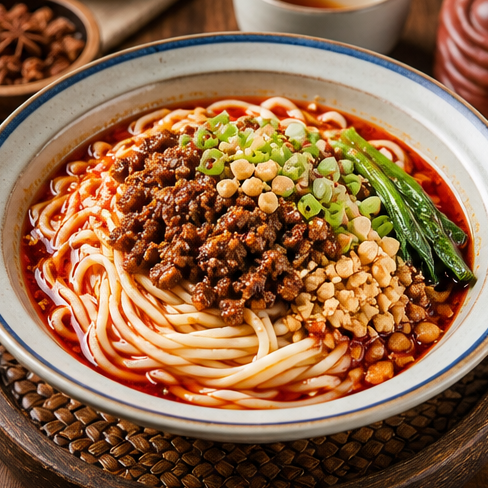
Image: AI-generated local food photograph, no brand or identifiable shop.
Zhong dumplings
Zhong dumplings are dumplings dressed in a sweet, garlicky, chili-oil sauce.
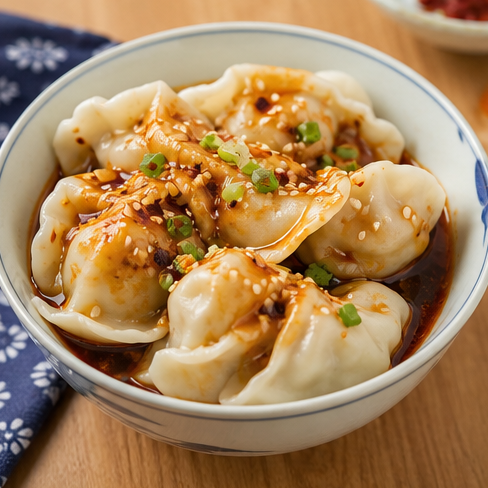
Image: AI-generated local food photograph, no brand or identifiable shop.
Mapo tofu
Mapo tofu is tofu in a spicy bean-paste sauce with minced meat and numbing peppercorn.
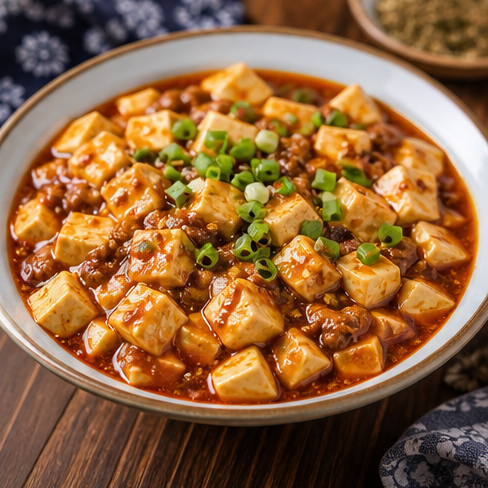
Image: AI-generated local food photograph, no brand or identifiable shop.
Read How to Order Food in China Without Speaking Chinese.
Timing and nearby add-ons
Chengdu can be hot and humid in summer, so plan pandas, temples, and outdoor walks early. Holiday crowds affect the Panda Base and famous pedestrian areas; avoid stacking multiple crowd-heavy stops in one day.
For nearby trips, Dujiangyan is the classic water-management and mountain-culture add-on, while Leshan Giant Buddha is a bigger day trip that needs transport planning and weather awareness. Do not add both unless you have enough extra days.
Practical tips
- Start panda-base day early and check official ticketing before departure.
- Leave space for tea, snacks, and a slower afternoon.
- Expect popular pedestrian streets to become crowded.
- Keep your hotel address and ride-hailing destination in Chinese.
- Use Chengdu as a base for future day-trip planning only after your city days feel comfortable.
- Keep one quiet tea-house or park stop in the plan; Chengdu's slower rhythm is part of the destination.
Chengdu orientation map

This is a planning map, not a navigation map. It groups the article's sights by rough area so travelers can judge which places are easy to combine in the same day.
Related reading
Sources and reference checks
- https://www.gochengdu.cn/en/article/food/304
- https://www.gochengdu.cn/article/happy_life_in_chengdu/4586
- https://www.gochengdu.cn/en/article/around_chengdu/858
- https://file.gochengdu.cn/file/20230418/72d8a7cf129f5d5027a132a6c7af3d93.pdf
- https://english.www.gov.cn/news/photos/202008/11/content_WS5f31fba4c6d029c1c26378dc.html
Conversation
Questions and comments
Share a question, correction, or reading note. Most comments appear automatically. Some are held briefly for review.
Need a private reply? Email chiyaoyaoya@gmail.com.
Loading comments...