C-Drama Culture Guide
Xianxia vs Wuxia Explained
A clear beginner guide to wuxia and xianxia: where the genres come from, how they developed, and how to read them in C-dramas.
- Last updated
- 2026-05-30
- Best for
- Drama viewers confused by Chinese fantasy and martial arts genre labels
- May change
- Genre boundaries, platform labels, subtitle choices, and drama examples
If wuxia asks what a human being can do with skill, courage, and loyalty, xianxia asks what happens when love, power, and destiny stretch across realms, lifetimes, and heaven itself.
A quick definition
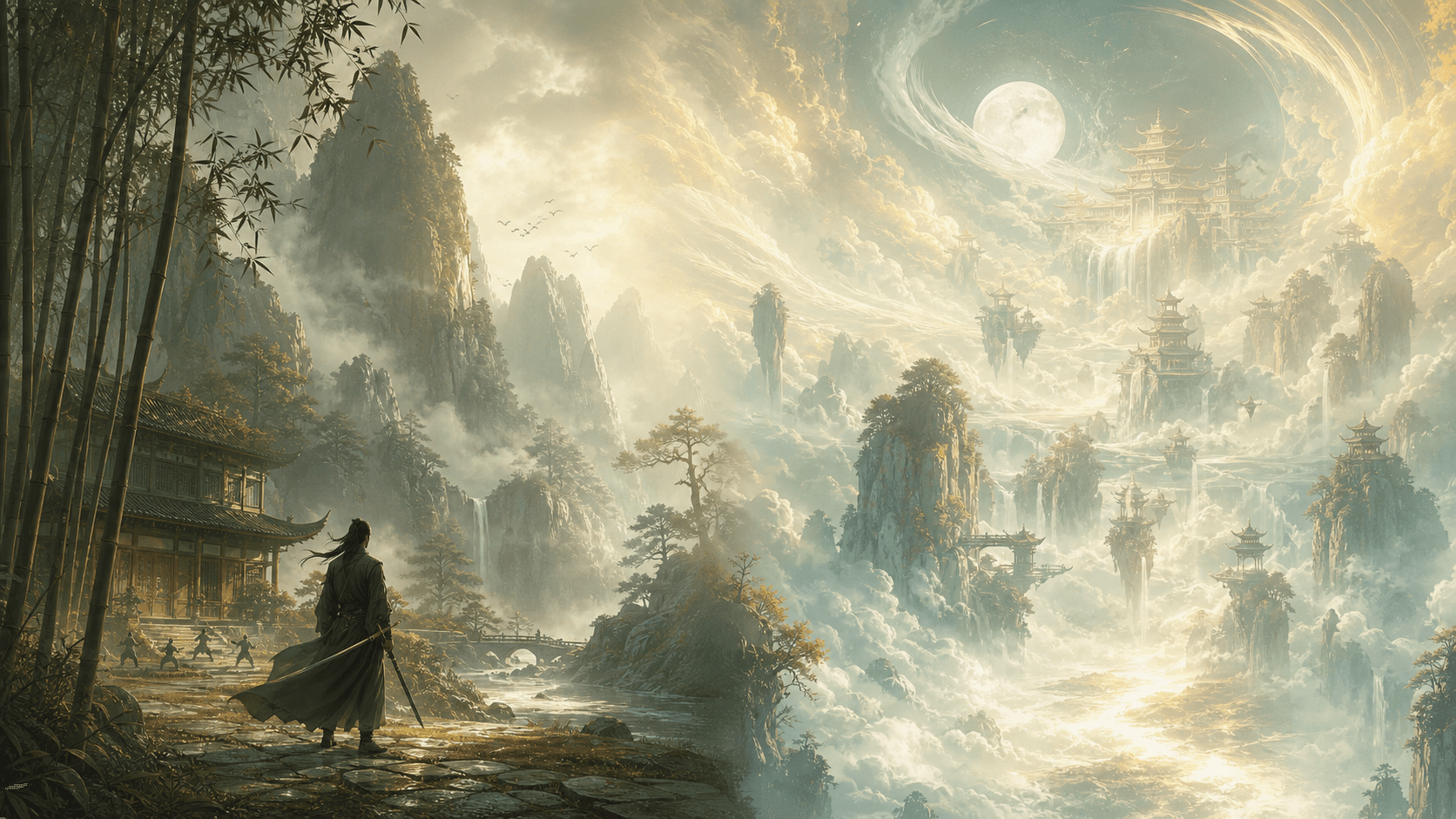
Wuxia and xianxia are two major Chinese storytelling traditions that often appear in C-dramas, novels, games, and animation. Wuxia usually focuses on martial heroes, human skill, sects, honor, revenge, loyalty, and justice. Xianxia usually adds immortals, cultivation, heavenly realms, demons, tribulations, reincarnation, and cosmic rules.
The simplest way to remember the difference is this: wuxia is closer to the martial world; xianxia is closer to mythic fantasy. Wuxia heroes may leap across rooftops with impossible grace. Xianxia characters may live for thousands of years, survive heavenly trials, and still somehow have worse communication skills than two people texting during a bad Wi-Fi day.
Where wuxia came from
Wuxia grows from the older cultural idea of xia, the chivalrous figure who acts with courage, loyalty, and personal justice. In Chinese cultural memory, xia characters often stand slightly outside ordinary official order. They may help the weak, repay kindness, keep promises, avenge injustice, or challenge powerful people when formal systems fail.
The wu part of wuxia means martial. Together, wuxia points to stories about martial heroes. These stories developed through literature, storytelling, opera, fiction, film, television, comics, and games. By the modern period, wuxia had become a recognizable genre with familiar elements: jianghu, martial sects, master-disciple relationships, secret manuals, rival schools, hidden identities, and moral tests.
At its heart, wuxia is not only about fighting. It is about what kind of person someone becomes when skill gives them power and society gives them pressure.
Where xianxia came from
Xianxia is related to xian, often translated as immortal or transcendent being. Its imagination draws from Chinese mythology, Daoist imagery, folk belief, Buddhist-influenced ideas, supernatural tales, and modern fantasy literature. Compared with wuxia, xianxia usually gives the story a larger cosmic stage.
In xianxia, characters may cultivate spiritual power, train in sects, ascend through levels, enter immortal realms, face heavenly law, fight demons, pass tribulations, or reincarnate. Love and loyalty still matter, but they are placed inside a universe where time is longer and consequences can feel cosmic.
That is why xianxia often feels more romantic, tragic, and grand. A misunderstanding is not just a misunderstanding. It may become a three-life emotional disaster with better costumes.
How the two genres developed
Wuxia became especially popular through modern fiction and screen adaptations. Its world could carry action, friendship, revenge, political injustice, moral choice, and wandering freedom. Many viewers learned to recognize the genre through famous martial arts stories and later television adaptations.
Xianxia grew strongly through modern web fiction and fantasy media. As online literature, games, and television developed, xianxia became a major style for stories about cultivation, immortals, demons, heavenly realms, reincarnation, and grand romance. It often borrows from older mythic and religious imagery, but reshapes it for entertainment.
The two genres also influence each other. Many dramas are not pure wuxia or pure xianxia. A story may begin with martial sects and later introduce immortal beings. Another may use xianxia worldbuilding but keep the emotional structure of wuxia: loyalty to a teacher, debt to a sect, revenge for a wrong, and the burden of reputation.
What they mean today
Today, wuxia and xianxia are not only literary labels. They are viewing expectations. When a drama is called wuxia, audiences expect martial society, jianghu, sect rules, skill, loyalty, and human moral conflict. When a drama is called xianxia, audiences expect immortals, cultivation, realms, tribulation, reincarnation, spiritual power, and fate.
For overseas viewers, these labels are useful because they explain why two costume dramas can feel completely different. One may be about a swordsman trying to keep a promise in jianghu. Another may be about an immortal trying to survive heavenly law, past-life karma, and a romance that has been emotionally cooking for several centuries.
In short, genre tells you what kind of rules the story is using.
What wuxia represents in C-dramas
In C-dramas, wuxia often represents moral freedom and social danger. The hero may not hold an official position, but they may have reputation, skill, and a personal code. The world around them is full of sects, alliances, grudges, and unwritten rules.
Wuxia dramas often ask: What does justice mean when official power is weak, corrupt, distant, or unavailable? Should a person obey the law, repay a debt, protect a friend, avenge a teacher, or walk away? The answer is rarely tidy, which is why the genre still works.
The best wuxia stories make martial arts emotional. A sword fight is not just choreography. It may be a test of loyalty, a farewell, a betrayal, a confession, or a very dramatic way to avoid saying "I am hurt."
What xianxia represents in C-dramas
Xianxia dramas often use fantasy to make emotional questions larger. A romance may cross lifetimes. A mistake may become karmic debt. A character may be born into a heavenly role but long for personal choice. A trial may test whether someone can remain compassionate after pain, power, and loss.
Xianxia also gives dramas a way to explore desire and restraint. Heavenly rules, sect rules, divine missions, and cosmic order often stand against love, friendship, and personal freedom. The result is a genre where characters may have enormous supernatural power and still be trapped by duty. Very relatable, in a spectacularly inconvenient way.
Example: wuxia-style storytelling
In wuxia-style dramas, a character often moves through jianghu by meeting masters, rivals, sworn friends, enemies, and people connected to old events. The plot may follow a mystery, a revenge path, a sect conflict, or a moral mission.
What matters is not only who wins a fight. Viewers are asked to track favors, promises, teacher-disciple bonds, reputation, and the cost of acting with honor. A quiet conversation in an inn can matter as much as a duel on a mountain path.
Example: xianxia-style storytelling
In xianxia-style dramas such as Eternal Love or Love Between Fairy and Devil, the story often expands beyond one human lifetime. Characters may belong to immortal, demonic, or heavenly realms. Romantic relationships may be shaped by fate, tribulation, memory loss, reincarnation, or cosmic duty.
These elements are not there only to make the story look grand. They change the emotional scale. A promise may last beyond death. A mistake may echo across realms. A relationship may be tested by heavenly order as much as by personal doubt.
A simple viewing guide
When you are not sure whether a drama is leaning wuxia or xianxia, ask:
- Are the main conflicts mostly human, martial, and social, or cosmic, immortal, and spiritual?
- Do characters gain power mainly through martial training or cultivation toward transcendence?
- Is the main world jianghu, or does the story move through heavenly, demonic, or immortal realms?
- Are the biggest pressures reputation and loyalty, or fate, tribulation, and heavenly law?
These questions will not solve every genre debate, but they will help you read the story more clearly.
A final way to understand the difference
Wuxia and xianxia are connected, but they do different emotional jobs. Wuxia turns martial skill into a test of justice, loyalty, and personal character. Xianxia turns fantasy and immortality into a test of love, destiny, restraint, and sacrifice.
Both genres are bigger than their surface details. Wuxia is not only swords. Xianxia is not only floating immortals and glowing artifacts. Each is a way of asking how people choose when power, duty, love, and consequence become impossible to separate.
Sources and reference checks
- 郭玉成:《武侠文化的历史传承与新时代发展》
- 韦易:《武侠文化与中国武术》
- 田雯丹:《中国仙侠剧的国际传播:神话叙事和文化认同》
- 滕晓瑜:《国产仙侠剧叙事研究》
- 牛芷若:《浅析影视剧的叙事艺术与审美转向——从武侠剧到仙侠剧》
Conversation
Questions and comments
Share a question, correction, or reading note. Most comments appear automatically. Some are held briefly for review.
Need a private reply? Email chiyaoyaoya@gmail.com.
Loading comments...